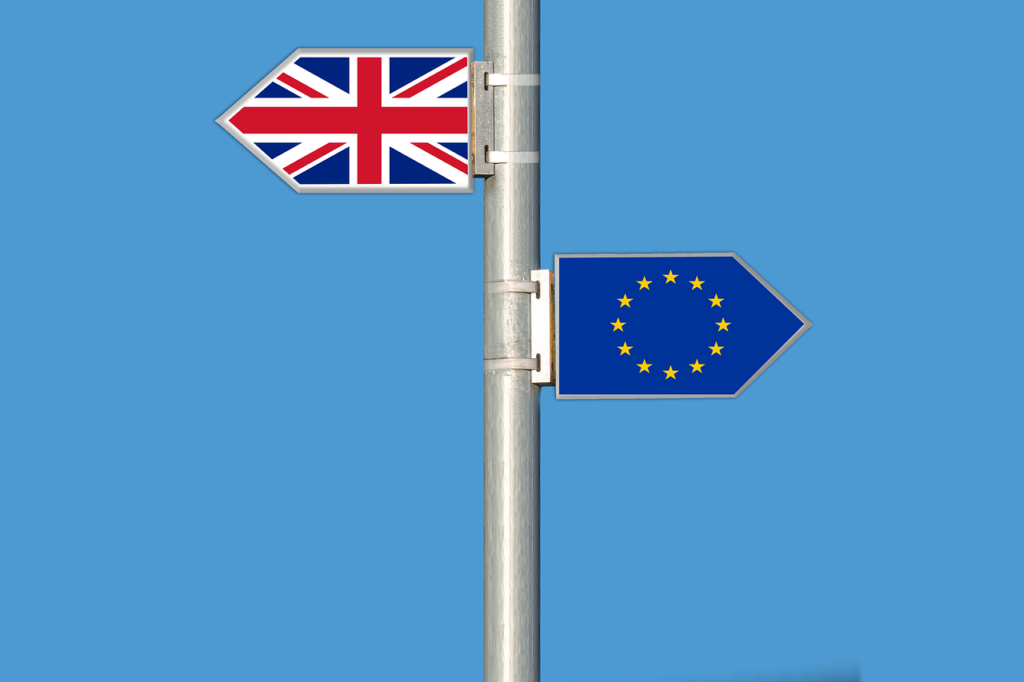
Will the UK still have to comply with the GDPR after Brexit?
Published:
· Last updated:
The ICO (Information Commissioner’s Office) has released its annual report, which has revealed an “unprecedented” year. It received 41,661 data protection complaints in 2018/19, up from 21,019 in 2017/18.
Big fines have hit the headlines since last May, as you’d expect; namely the €50 million fine imposed on Google by a French regulator for not complying with the rules when it comes to using personal data in tailored online advertising.
Recently, the ICO announced its intention to fine Marriott International over £99 million for GDPR infringements, after a security breach which exposed around 339 million guest records across the globe.
Although these fines make for worrying reading, the data protection authorities have been careful on the whole not to be too heavy-handed, and are sympathetic to the GDPR administrative burden (by which small to medium enterprises with limited cashflow and resources are likely to be worst hit)
We expect that the enforcement activity will continue to gather pace as the settling-in period passes. With this in mind, it’s not too late to take stock and do an audit on your GDPR compliance processes, such as reviewing your policies and supplier contracts, and how your policies are working in practice. You should regularly conduct refresher training for staff who are involved in handling personal data or ask specialists to come and do this for you – we’ve been asked by many clients to come to their organisation and deliver inhouse training.
Brexit and GDPR – will UK businesses still need to comply?
Yes. After the anticipated Brexit date, things are likely to get more complicated for UK companies doing business in Europe. Since we’ll no longer be part of the EU, a UK company may find itself subject to both the GDPR and the parallel Applied GDPR regime, so will have to answer to not only the ICO, but also one or more EU Regulators.
There will be new rules to comply with when it comes to transferring data out of the EU, which will require existing contracts to be audited for compliance. In the event of a no deal Brexit and, in the absence of an adequacy ruling, for most companies, any transfer of personal data from the EU to the UK within the current legal framework, will need to be managed contractually through the use of model EU clauses.
How else may my business be affected?
You may also be required to nominate an Article 27 representative within the EU to act as an interface between your company and your EU data subjects, or relevant EU supervisory authority.
As well as reviewing the contractual side of things, you will need to update your online privacy notice to inform customers of the steps which you have taken to ensure the compliant transfer of personal data between the UK and the EU, and to inform EU data subjects of the identity of of your Article 27 Representative.
Businesses should remember that that this whole ongoing exercise isn’t just about avoiding fines or adverse PR. The main objective is a worthy one – respecting privacy of data subjects, handling their data responsibly and keeping it safe. If these principles are ingrained in the way your organisation operates, you are on the right track.
As always, if you need commercial and pragmatic legal advice concerning data protection and GDPR, we’re here to help so please get in touch.
Disclaimer: All legal information is correct at the time of publication but please be aware that laws may change over time. This article contains general legal information but should not be relied upon as legal advice. Please seek professional legal advice about your specific situation - contact us; we’d be delighted to help.
The Data (Use and Access) Act 2025 will come into effect from 1 June this year. Our team introduces the act, looking into how it could impact your business. The…
New standard clauses mean organisations will need to incorporate either the International Data Transfer Agreement or the UK Addendum in all contracts concluded on or after 22 September 2022. This…
By clicking Accept you are agreeing to the use of all cookies which will allow us to provide you with the most relevant experience when visiting or re-visiting this website. This means that your personal preferences will be remembered when you use this website. You can change your consent or choose specific settings by clicking "Cookie Settings". By clicking "Reject All" we will not use any non-essential cookies. Essential cookies will still be used for the website to function properly. Please see our cookie policy and privacy notice for more information about how we process your personal data.
Our website uses cookies to improve your experience while you navigate through our website. Out of these cookies, the cookies that are categorised as necessary are stored on your browser as they are essential for the working of basic functionalities of the website. We also use third-party cookies that help us analyse and understand how you use our website. These cookies will be stored in your browser only with your consent. You also have the option to opt-out of these cookies but it may affect your browsing experience on our website. You can find our cookie policy here.
Necessary cookies are absolutely essential for our website to function and enable core functionality such as security and accessibility. These cookies do not store any personal information. You can block these cookies by changing your browser settings, but this may affect how the website functions.
Functional cookies help to perform certain functionalities like sharing the content of the website on social media platforms, collect feedbacks, and other third-party features.
Cookie
Duration
Description
__cf_bm
30 minutes
This cookie, set by Cloudflare, is used to support Cloudflare Bot Management.
mgref
1 year
This cookie is set by Eventbrite to deliver content tailored to the end user's interests and improve content creation. It is also used for event-booking purposes.
yt-player-headers-readable
never
The yt-player-headers-readable cookie is used by YouTube to store user preferences related to video playback and interface, enhancing the user's viewing experience.
yt-remote-cast-installed
session
The yt-remote-cast-installed cookie is used to store the user's video player preferences using embedded YouTube video.
yt-remote-connected-devices
never
YouTube sets this cookie to store the user's video preferences using embedded YouTube videos.
yt-remote-device-id
never
YouTube sets this cookie to store the user's video preferences using embedded YouTube videos.
yt-remote-fast-check-period
session
The yt-remote-fast-check-period cookie is used by YouTube to store the user's video player preferences for embedded YouTube videos.
yt-remote-session-app
session
The yt-remote-session-app cookie is used by YouTube to store user preferences and information about the interface of the embedded YouTube video player.
yt-remote-session-name
session
The yt-remote-session-name cookie is used by YouTube to store the user's video player preferences using embedded YouTube video.
ytidb::LAST_RESULT_ENTRY_KEY
never
The cookie ytidb::LAST_RESULT_ENTRY_KEY is used by YouTube to store the last search result entry that was clicked by the user. This information is used to improve the user experience by providing more relevant search results in the future.
Performance cookies are used to understand and analyze the key performance indexes of the website which helps in delivering a better user experience for the visitors.
Analytical cookies are used to understand how visitors interact with the website. These cookies help provide information on metrics the number of visitors, bounce rate, traffic source, etc.
Cookie
Duration
Description
_ga
2 years
The _ga cookie, installed by Google Analytics, calculates visitor, session and campaign data and also keeps track of site usage for the site's analytics report. The cookie stores information anonymously and assigns a randomly generated number to recognize unique visitors.
_gat
1 minute
This cookie is installed by Google Universal Analytics to restrain request rate and thus limit the collection of data on high traffic sites.
_gid
1 day
Installed by Google Analytics, _gid cookie stores information on how visitors use a website, while also creating an analytics report of the website's performance. Some of the data that are collected include the number of visitors, their source, and the pages they visit anonymously.
_s
1 year
This cookie is associated with Shopify's analytics suite.
G
1 year
Cookie used to facilitate the translation into the preferred language of the visitor.
vuid
2 years
Vimeo installs this cookie to collect tracking information by setting a unique ID to embed videos to the website.
Advertisement cookies are used to provide visitors with relevant ads and marketing campaigns. These cookies track visitors across websites and collect information to provide customized ads.
Cookie
Duration
Description
VISITOR_INFO1_LIVE
6 months
YouTube sets this cookie to measure bandwidth, determining whether the user gets the new or old player interface.
VISITOR_PRIVACY_METADATA
6 months
YouTube sets this cookie to store the user's cookie consent state for the current domain.
YSC
session
Youtube sets this cookie to track the views of embedded videos on Youtube pages.